
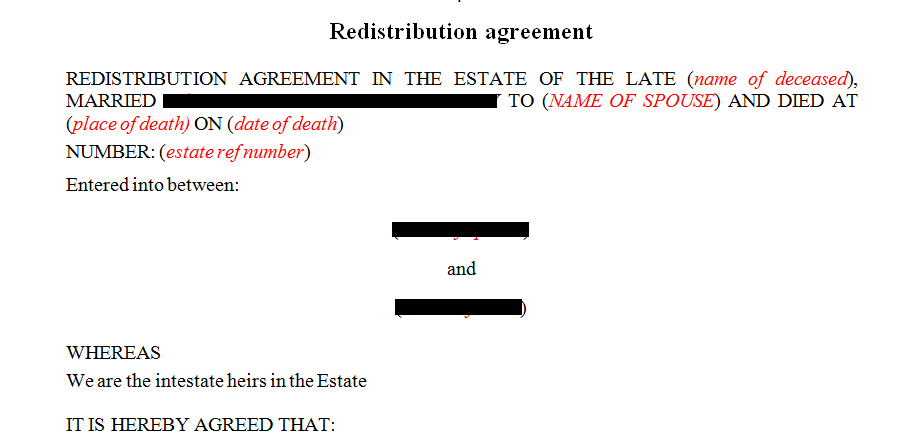
Redistribution agreement
FREE

Ask the similar questions
Redistribution agreement
Distribution Agreement
The distribution agreement accessed on www.LawyersEzyFind.co.za provides clients with a model contract which is necessary for parties who are in the business of distributing goods or services.
A distribution agreement usually involves a distributor who buys products from a manufacturer or other seller, takes title to those goods, and resells them to its customers.
It is important to have a distribution agreement drawn up in order to govern the relationship between suppliers or manufacturers and
distributors. Suppliers or manufacturers engage with these distributors to sell their products at a retail or wholesale level. Therefore, it is crucial for
both parties to consider and understand the key terms of a distribution agreement. Such terms may vary, depending on the specific arrangement between parties.
Purpose of the Distribution Agreement
Businesses or individuals may use distribution agreements for a variety of purposes. Some appoint a distributor for vehicle purposes to get their
products to the market. Others appoint a distributor to benefit from their expertise, or to share customer lists and market contacts.
Length of the Distribution Agreement
The length of the distribution arrangement is often referred to as the ‘term’ of the contract. Distribution agreements may:
• be for a set period of time;
• be an ongoing arrangement; or
• extend for a further period (which may also be subject to certain criteria).
The length of the arrangement is particularly important if the distribution arrangement has minimum order requirements or an element of exclusivity.
Exclusive or Non-Exclusive Appointment
An exclusive appointment often means that a distributor is the sole distributor of the product. The distributor can also be exclusively
confined to a specific area (such as a state, country or region). Such appointments are useful for businesses that wish to have a distributor
representing them where that distributor has particular familiarity or market presence. For example, a distributor within a specific area can
respond to all enquiries and satisfy all orders in that area. A non-exclusive appointment is opposite to an exclusive appointment. It
allows distributors to operate alongside other distributors (potentially including the supplier or wholesaler under the agreement). However, a
non-exclusive appointment for a distributor may lead to competition within the distribution network.
Minimum Standards or Performance
For many exclusive arrangements, suppliers or wholesalers may require the distributor to maintain a level of performance. Their performance
may be on the basis of revenue targets or minimum purchase orders.
Such clauses help to ensure the justification of exclusive arrangements. A minimum standard or minimum performance clause also codifies the
possibility of appointing additional distributors to a specific area if a distributor is not performing in line with the standard. Minimum standards
should, ideally, be determined before both parties enter the distribution agreement. Determining the standards beforehand ensures that both
parties are aware of the obligations and requirements they must fulfil.
Marketing and Promotion
Marketing and promotion may be the responsibility of the distributor, the supplier/ wholesaler or both parties. The supplier or wholesaler may
require that the distributor only use specific assets to market or sell the products for distribution. They may require the distributor to follow
particular guidelines relating to branding. Distributors may also have an obligation to undertake additional marketing or promotional activities. For example, other activities may include:
• attending trade shows;
• creating their marketing or promotional materials; or
• attending to customer visits or training events.
The obligation of each party, again, depends on whether the distribution agreement is an exclusive or non-exclusive arrangement. You should
note that exclusive arrangements are likely to have more obligations regarding marketing and promotion. It will also depend on the nature of
products being sold, and the level of control that the supplier or wholesaler would like to retain over its brand and reputation in the market.
Training and Support
Often, the supplier or wholesaler needs to outline the level of training and support they will provide to the distributor and whether they will be
available to train any end-customers as to the use of the product. Therefore, training is often one of the key terms of a distribution
agreement for more technical products. Distributors should also be looking out for the support they will receive from a supplier or
wholesaler. For example, distributors should consider whether the supplier or wholesaler will be:
• listing the distributor on their website;
• transferring enquiries to the distributor; or
• including the distributor in their promotional materials.
Competition
For some distribution arrangements, competition is an important factor. Common clauses in a distribution contract place restrictions on the
distributor from purchasing similar products from the supplier or wholesaler.
Furthermore, there may be a restriction on a distributor from competing with the supplier or wholesaler during the distribution or arrangement
and even after it expires. However, competition restrictions may not apply to all products. They typically apply where the product is unique
(and cannot be purchased from other suppliers or wholesalers) or if the distributor has stronger bargaining power.
Orders, Delivery and Payment
The ordering, delivery and payment process largely depends on the supplier or wholesaler’s procedures and processes. For example, there
may be a requirement to make orders via:
• an online software platform; or
• sending an order form to the supplier or wholesaler.
In any event, the key terms of a distribution agreement should make it clear when and how both parties accept and pay for an order.
Furthermore, both parties should consider when the legal ownership and risk in the product will pass on to the other party. For example, the
distribution agreement should state which party is liable if something happens to the product during delivery. Depending on when the risk
passes, the relevant party should ensure that they have relevant insurance in place to be able to cover their possible liability.
Important Considerations
To ensure that a distribution agreement is in line with your best interests, it is important to be aware of, and understand, its key terms. The key
terms of a distribution agreement can vary on multiple factors including the:
• product to be distributed;
• appointment of the distributor; and
• obligations that each party have relating to the marketing, sale and distribution of the product
The distribution agreement accessed on www.LawyersEzyFind.co.za provides clients with a model contract which is necessary for parties who are in the business of distributing goods or services.
A distribution agreement usually involves a distributor who buys products from a manufacturer or other seller, takes title to those goods, and resells them to its customers.
It is important to have a distribution agreement drawn up in order to govern the relationship between suppliers or manufacturers and
distributors. Suppliers or manufacturers engage with these distributors to sell their products at a retail or wholesale level. Therefore, it is crucial for
both parties to consider and understand the key terms of a distribution agreement. Such terms may vary, depending on the specific arrangement between parties.
Purpose of the Distribution Agreement
Businesses or individuals may use distribution agreements for a variety of purposes. Some appoint a distributor for vehicle purposes to get their
products to the market. Others appoint a distributor to benefit from their expertise, or to share customer lists and market contacts.
Length of the Distribution Agreement
The length of the distribution arrangement is often referred to as the ‘term’ of the contract. Distribution agreements may:
• be for a set period of time;
• be an ongoing arrangement; or
• extend for a further period (which may also be subject to certain criteria).
The length of the arrangement is particularly important if the distribution arrangement has minimum order requirements or an element of exclusivity.
Exclusive or Non-Exclusive Appointment
An exclusive appointment often means that a distributor is the sole distributor of the product. The distributor can also be exclusively
confined to a specific area (such as a state, country or region). Such appointments are useful for businesses that wish to have a distributor
representing them where that distributor has particular familiarity or market presence. For example, a distributor within a specific area can
respond to all enquiries and satisfy all orders in that area. A non-exclusive appointment is opposite to an exclusive appointment. It
allows distributors to operate alongside other distributors (potentially including the supplier or wholesaler under the agreement). However, a
non-exclusive appointment for a distributor may lead to competition within the distribution network.
Minimum Standards or Performance
For many exclusive arrangements, suppliers or wholesalers may require the distributor to maintain a level of performance. Their performance
may be on the basis of revenue targets or minimum purchase orders.
Such clauses help to ensure the justification of exclusive arrangements. A minimum standard or minimum performance clause also codifies the
possibility of appointing additional distributors to a specific area if a distributor is not performing in line with the standard. Minimum standards
should, ideally, be determined before both parties enter the distribution agreement. Determining the standards beforehand ensures that both
parties are aware of the obligations and requirements they must fulfil.
Marketing and Promotion
Marketing and promotion may be the responsibility of the distributor, the supplier/ wholesaler or both parties. The supplier or wholesaler may
require that the distributor only use specific assets to market or sell the products for distribution. They may require the distributor to follow
particular guidelines relating to branding. Distributors may also have an obligation to undertake additional marketing or promotional activities. For example, other activities may include:
• attending trade shows;
• creating their marketing or promotional materials; or
• attending to customer visits or training events.
The obligation of each party, again, depends on whether the distribution agreement is an exclusive or non-exclusive arrangement. You should
note that exclusive arrangements are likely to have more obligations regarding marketing and promotion. It will also depend on the nature of
products being sold, and the level of control that the supplier or wholesaler would like to retain over its brand and reputation in the market.
Training and Support
Often, the supplier or wholesaler needs to outline the level of training and support they will provide to the distributor and whether they will be
available to train any end-customers as to the use of the product. Therefore, training is often one of the key terms of a distribution
agreement for more technical products. Distributors should also be looking out for the support they will receive from a supplier or
wholesaler. For example, distributors should consider whether the supplier or wholesaler will be:
• listing the distributor on their website;
• transferring enquiries to the distributor; or
• including the distributor in their promotional materials.
Competition
For some distribution arrangements, competition is an important factor. Common clauses in a distribution contract place restrictions on the
distributor from purchasing similar products from the supplier or wholesaler.
Furthermore, there may be a restriction on a distributor from competing with the supplier or wholesaler during the distribution or arrangement
and even after it expires. However, competition restrictions may not apply to all products. They typically apply where the product is unique
(and cannot be purchased from other suppliers or wholesalers) or if the distributor has stronger bargaining power.
Orders, Delivery and Payment
The ordering, delivery and payment process largely depends on the supplier or wholesaler’s procedures and processes. For example, there
may be a requirement to make orders via:
• an online software platform; or
• sending an order form to the supplier or wholesaler.
In any event, the key terms of a distribution agreement should make it clear when and how both parties accept and pay for an order.
Furthermore, both parties should consider when the legal ownership and risk in the product will pass on to the other party. For example, the
distribution agreement should state which party is liable if something happens to the product during delivery. Depending on when the risk
passes, the relevant party should ensure that they have relevant insurance in place to be able to cover their possible liability.
Important Considerations
To ensure that a distribution agreement is in line with your best interests, it is important to be aware of, and understand, its key terms. The key
terms of a distribution agreement can vary on multiple factors including the:
• product to be distributed;
• appointment of the distributor; and
• obligations that each party have relating to the marketing, sale and distribution of the product
Legal App FREE Download - We Handle Your Case On The Go